Loading player...
Artifacts
S1 E1- A Brush with Wisdom
6.8
2000
1 Seasons
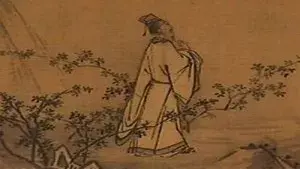
When Westerners first discovered Chinese paintings, they could not see their value. They wouldn't even acknowledge them as art. But, as Confucius noted, it is possible to look without seeing. If you learn to see beyond the surface of these paintings, you will discover their real beauty and find the deepest truths of the Chinese philosophies of life. Enter the hidden world of Chinese painting. What makes a Chinese painting so distinctive, so immediately recognizable as Chinese? Is it the subject matter that Chinese artists chose to paint? Is it the different tools and techniques that they used? Or is it how they saw what they were looking at? How do we begin to understand this unique painting tradition which has survived virtually unchanged for so many centuries? Well, in China, they say to understand painting you need to understand calligraphy - the art of writing Chinese characters with a brush.
Seasons
Episodes
1. A Brush with Wisdom
N/AWhen Westerners first discovered Chinese paintings, they could not see their value. They wouldn't even acknowledge them as art. But, as Confucius noted, it is possible to look without seeing. If you learn to see beyond the surface of these paintings, you will discover their real beauty and find the deepest truths of the Chinese philosophies of life. Enter the hidden world of Chinese painting. What makes a Chinese painting so distinctive, so immediately recognizable as Chinese? Is it the subject matter that Chinese artists chose to paint? Is it the different tools and techniques that they used? Or is it how they saw what they were looking at? How do we begin to understand this unique painting tradition which has survived virtually unchanged for so many centuries? Well, in China, they say to understand painting you need to understand calligraphy - the art of writing Chinese characters with a brush.